कृत्तिका तारागुच्छा
Open cluster in the constellation of Taurus.
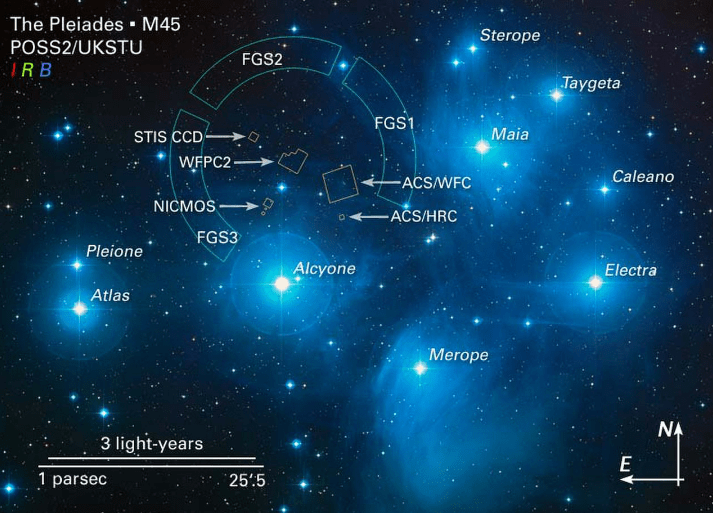
The Pleiades, also known as the Seven Sisters and Messier 45, are an open star cluster containing middle-aged, hot B-type stars in the north-west of the constellation Taurus.
The cluster is dominated by hot blue and luminous stars that have formed within the last 100 million years. Reflection nebulae around the brightest stars were once thought to be left over material from the formation of the cluster, but are now considered likely to be an unrelated dust cloud in the interstellar medium through which the stars are currently passing.
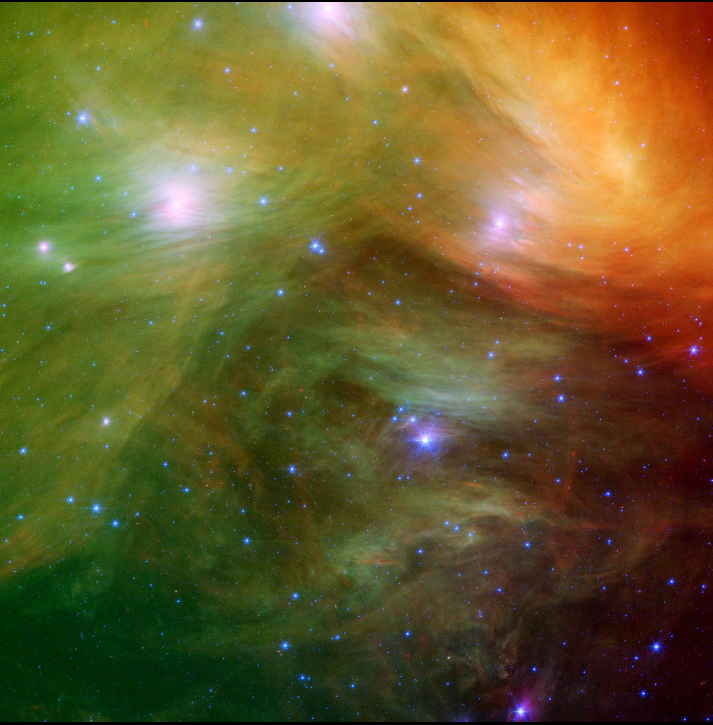
Credit: NASA 
Credit: technophysicsschool
The cluster core radius is about 8 light-years and tidal radius is about 43 light-years. The cluster contains over 1,000 statistically confirmed members, although this figure excludes unresolved binary stars. Its light is dominated by young, hot blue stars, up to 14 of which can be seen with the naked eye depending on local observing conditions. The arrangement of the brightest stars is somewhat similar to Ursa Major and Ursa Minor. The total mass contained in the cluster is estimated to be about 800 solar masses and is dominated by fainter and redder stars.
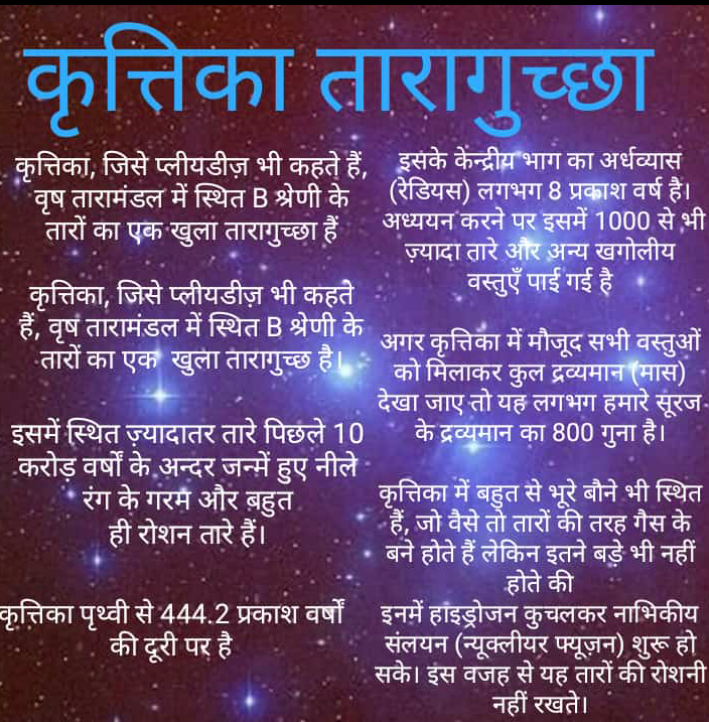
The cluster contains many brown dwarfs, which are objects with less than about 8% of the Sun’s mass, not heavy enough for nuclear fusion reactions to start in their cores and become proper stars.
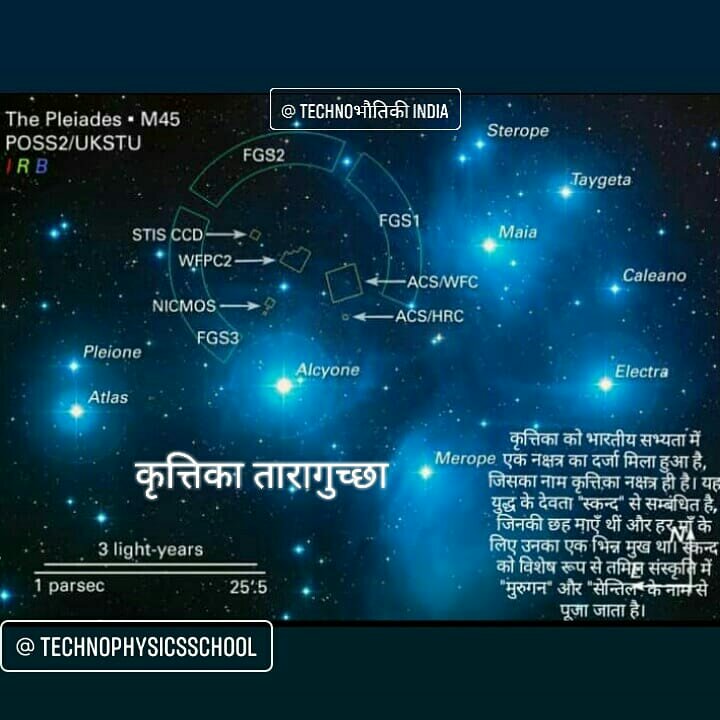
The nine brightest stars of the Pleiades are named for the Seven Sisters of Greek mythology: Sterope, Merope, Electra, Maia, Taygeta, Celaeno, and Alcyone, along with their parents Atlas and Pleione. As daughters of Atlas, the Hyades were sisters of the Pleiades.
Technophysicsschool – Science, Technology and Engineering Group

 Technoभौतिकी India