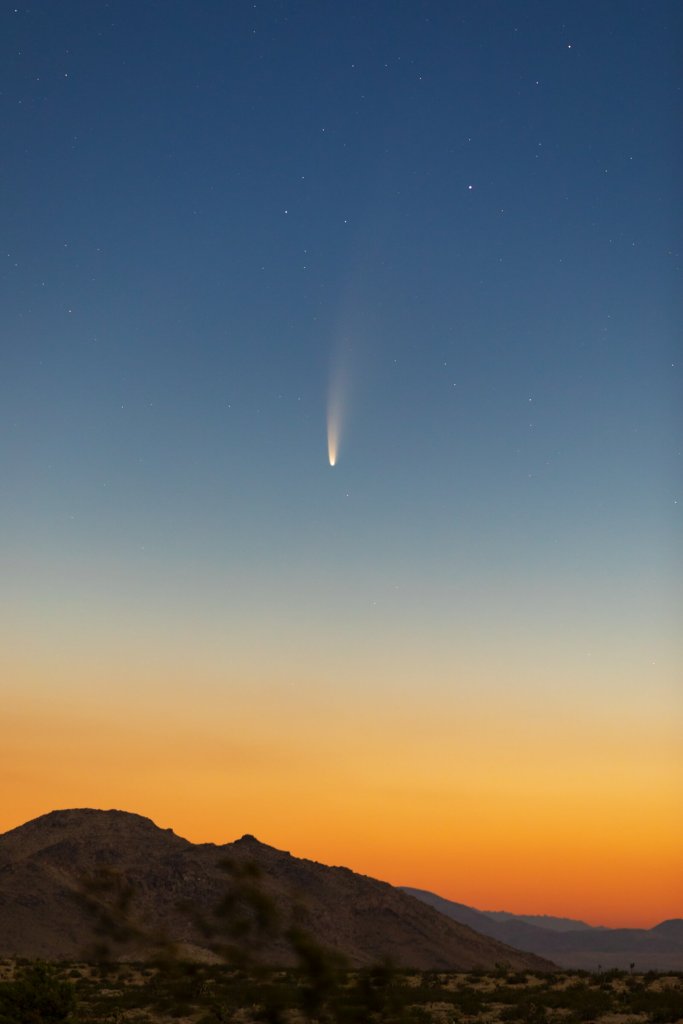
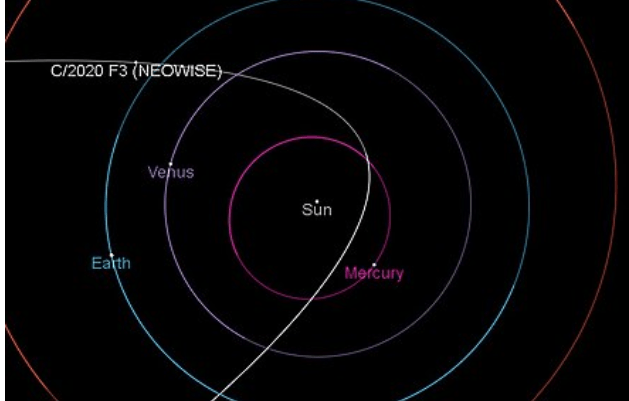
C/2020 F3 (NEOWISE), or Comet NEOWISE, is a retrograde comet with a near-parabolic orbit discovered on March 27, 2020 by the NEOWISE space telescope. It passed closest to the Sun on July 3, 2020 and if it continues to survive perihilion 0.29 AU(43 million km) from the Sun, it is expected to remain visible to the naked eye in July.
As of 10 June 2020 it was apparent magnitude 7,and when the comet entered the field of view of SOHO LASCO C3 on 22 June 2020 the comet had brightened to magnitude 3.
As of July, Comet NEOWISE has brightened to magnitude +1, far exceeding the brightness attained by C/2020 F8 (SWAN), and the comet has developed a second tail. One tail is made of dust and the other tail is made of gas.
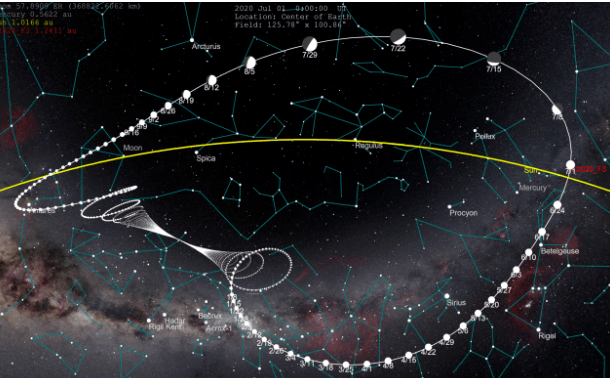
The comet will be less than 20 degrees from the Sun from June 11, 2020 until July 9, 2020. Closest approach to Earth will occur July 23, 2020 at a distance of 0.69 AU (103 million km). This perihilion passage will increase the comet’s orbital period from about 4500 years to about 6800 years
Perihelion and Aphelion
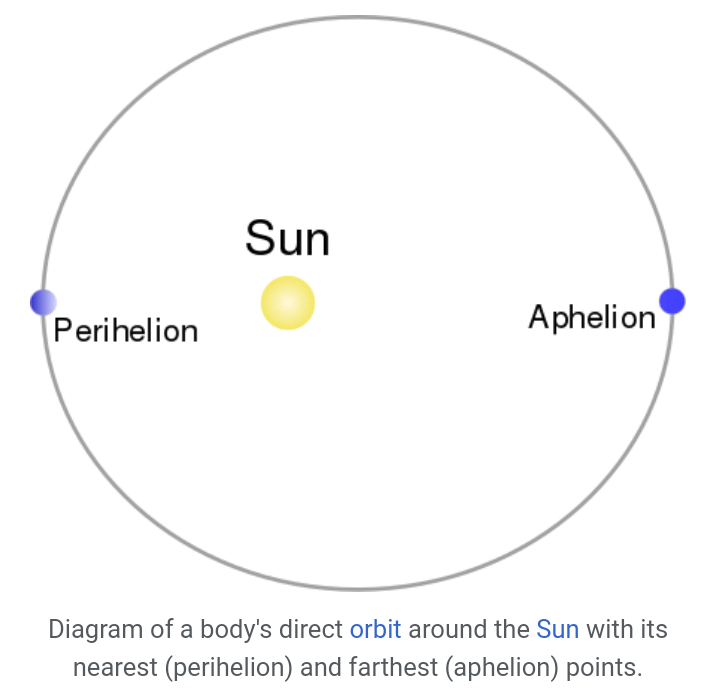
The perihelion is nearest and aphelion is farthest points of a body’s direct orbit around the Sun.
Current Location:

Comet C/2020 F3 (NEOWISE) is currently in the constellation of Auringa The current Right Ascension of Comet C/2020 F3 (NEOWISE) is 06h 30m 01s and the Declination is +39° 38’ 59” (topocentric coordinates computed for the selected location: Greenwich, United Kingdom). The current estimated magnitude of Comet C/2020 F3 (NEOWISE) is 3.00 (JPL) while the latest observed magnitude is 1.6 (COBS).
When Does Comet C/2020 F3 (NEOWISE) Rise and Set? Precise Rise and Set Times.
Comet C/2020 F3 (NEOWISE) is circumpolar and transits at 11:18 UTC (altitude: 78.2°)
The rise and set times are defined as the time at which the upper limb of Comet C/2020 F3 (NEOWISE) touches the horizon, consideting the effect of the atmospheric refraction. As the atmoshpere conditions cannot be modeled precisely the times reported here should be considered correct with an approximation of few minutes.
Comet NEOWISE Location
People wishing to catch a glimpse of the glowing comet can spot it as it swings through the inner solar system, but its nearness to the Sun creates some observing challenges.
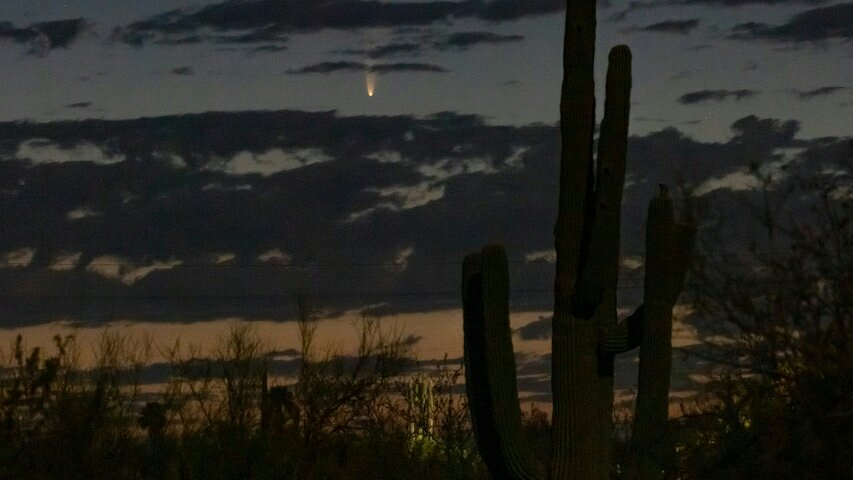
Credits: Vishnu Reddy
Skywatchers in the northern hemisphere are being treated to the sight of a newly-discovered comet this month which can be observed even with the naked eye by the lucky ones.
Comet C/2020 F3 (NEOWISE) is up at dawn now; it will be highest in the dawn sky around July 11. Then it will gradually approach the horizon each day. By mid July (around July 12-15), the comet will become visible at dusk (just after sunset), low in the northwest horizon.
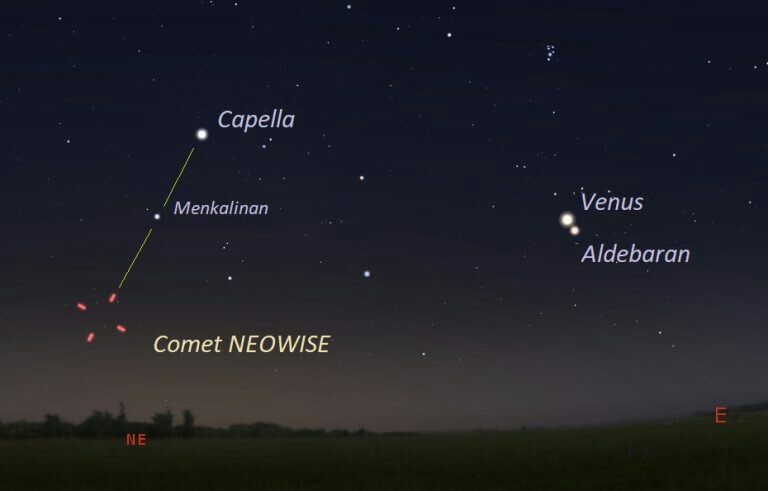
If the comet remains relatively bright, it might be easier to see in the second half of July during evening dusk, because, at that time, it will appear somewhat higher in the sky.
If you are standing facing east, you will see Venus, which is the third-brightest object in the sky (after the moon and sun). Look to the planet’s left to see the bright star Capella. The comet will be below Capella during the mornings of the first half of July, but moving to the left (north) each day
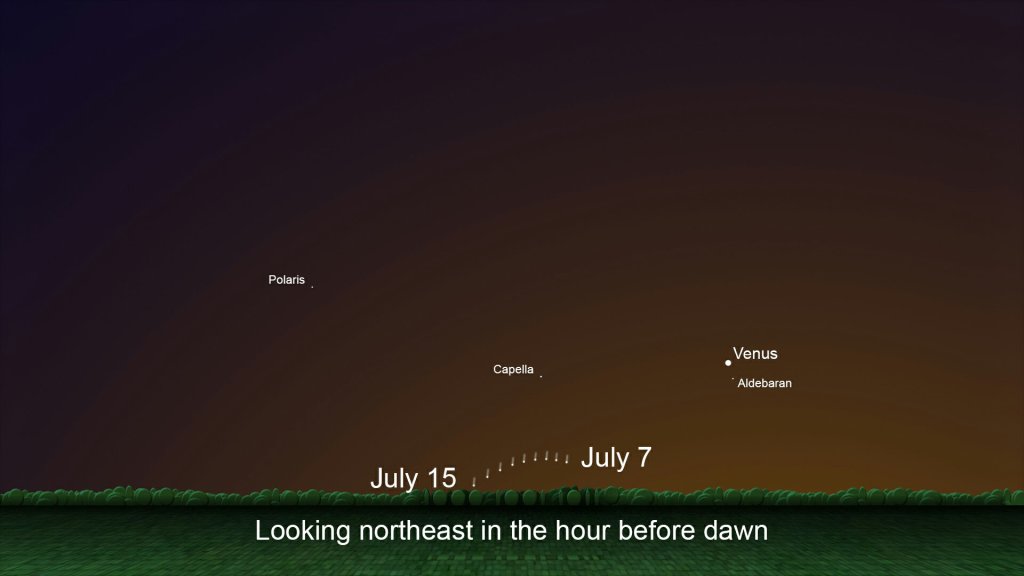
Comet NEOWISE will be closest to Earth on July 22-23, 2020. It will pass at some 64 million miles (103 million km) from our planet. The good news is that – if the comet continues looking great – the view during the night of closest approach should be nice. Although binoculars might be required for the celestial visitor, it will be visible at the same time we see a beautiful crescent (not too bright) moon.
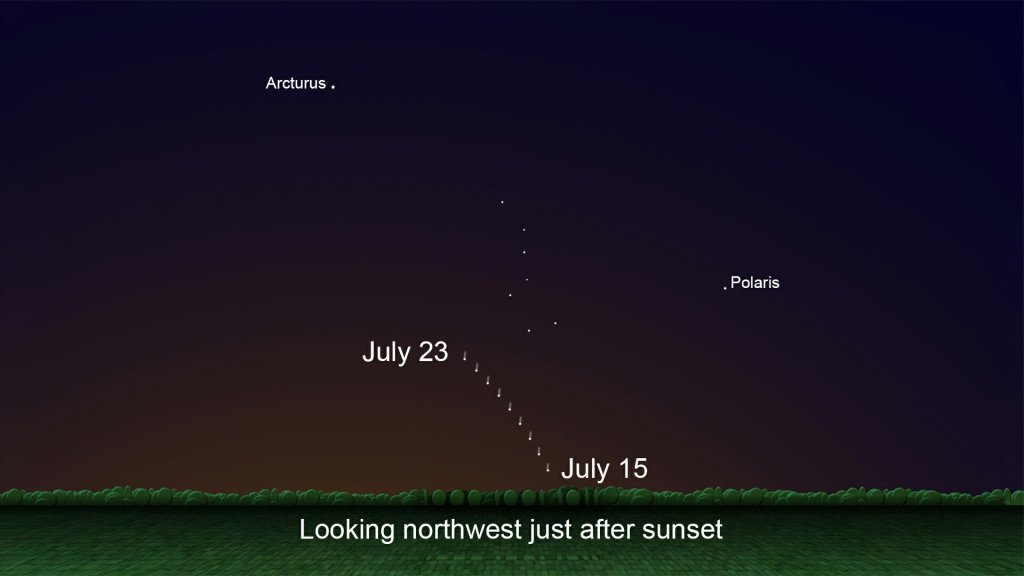
And forget about making plans to view this comet’s next apparition in Earth’s skies. Comet NEOWISE might be visible again from Earth, but not until around the year 8,786!
How big is Comet NEOWISE?
“From its infrared signature, we can tell (its nucleus) is about 5 km [3 miles] across… and is covered with sooty, dark particles left over from its formation near the birth of our solar system 4.6 billion years ago,” said Joseph Masiero, NEOWISE deputy principal investigator at NASA’s Jet Propulsion Laboratory.
NEOWISE
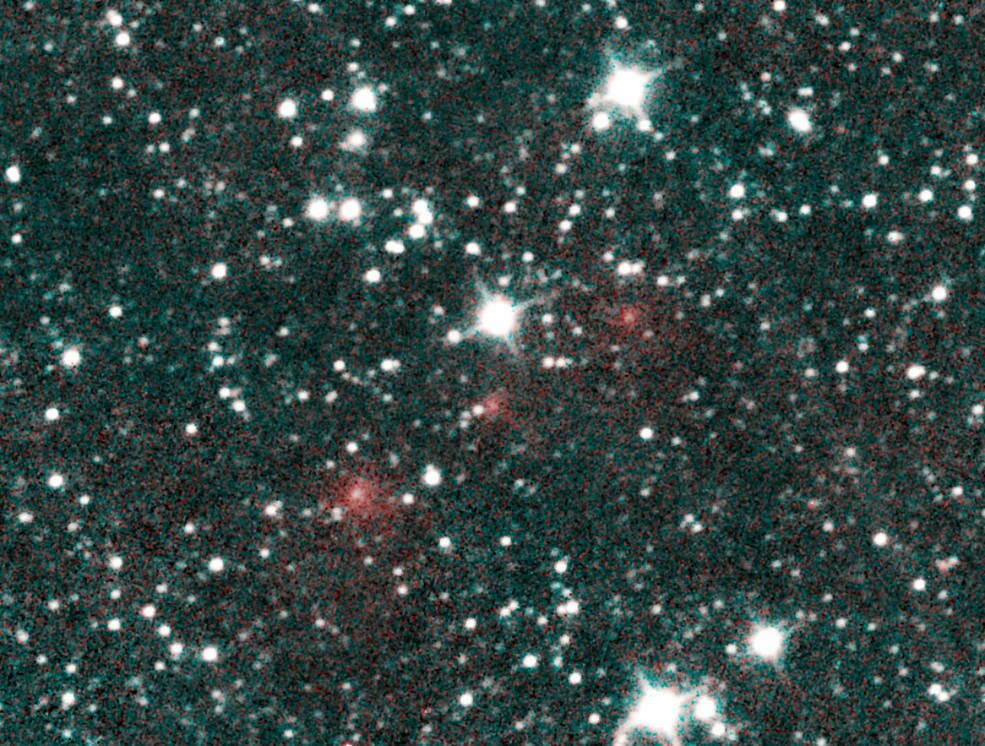
Credits: NASA/JPL-Caltech
NASA’s Near-Earth Object Wide-field Infrared Survey Explorer (NEOWISE) mission discovered the icy visitor on March 27, 2020, using its two infrared channels, which are sensitive to the heat signatures given off by the object as the Sun started to turn up the heat.
“In its discovery images, Comet NEOWISE appeared as a glowing, fuzzy dot moving across the sky even when it was still pretty far away,” said Amy Mainzer, NEOWISE principal investigator at the University of Arizona. “As soon as we saw how close it would come to the Sun, we had hopes that it would put on a good show.”

 Technoभौतिकी India